There is a point in every growing codebase where the quality conversation starts sounding clever and feeling useless. People say things like “we need more coverage” and “we should probably tighten regression” while the repo itself is sitting there like a shed full of loose fireworks, and nobody can quite agree which fuse is the one to worry about first.
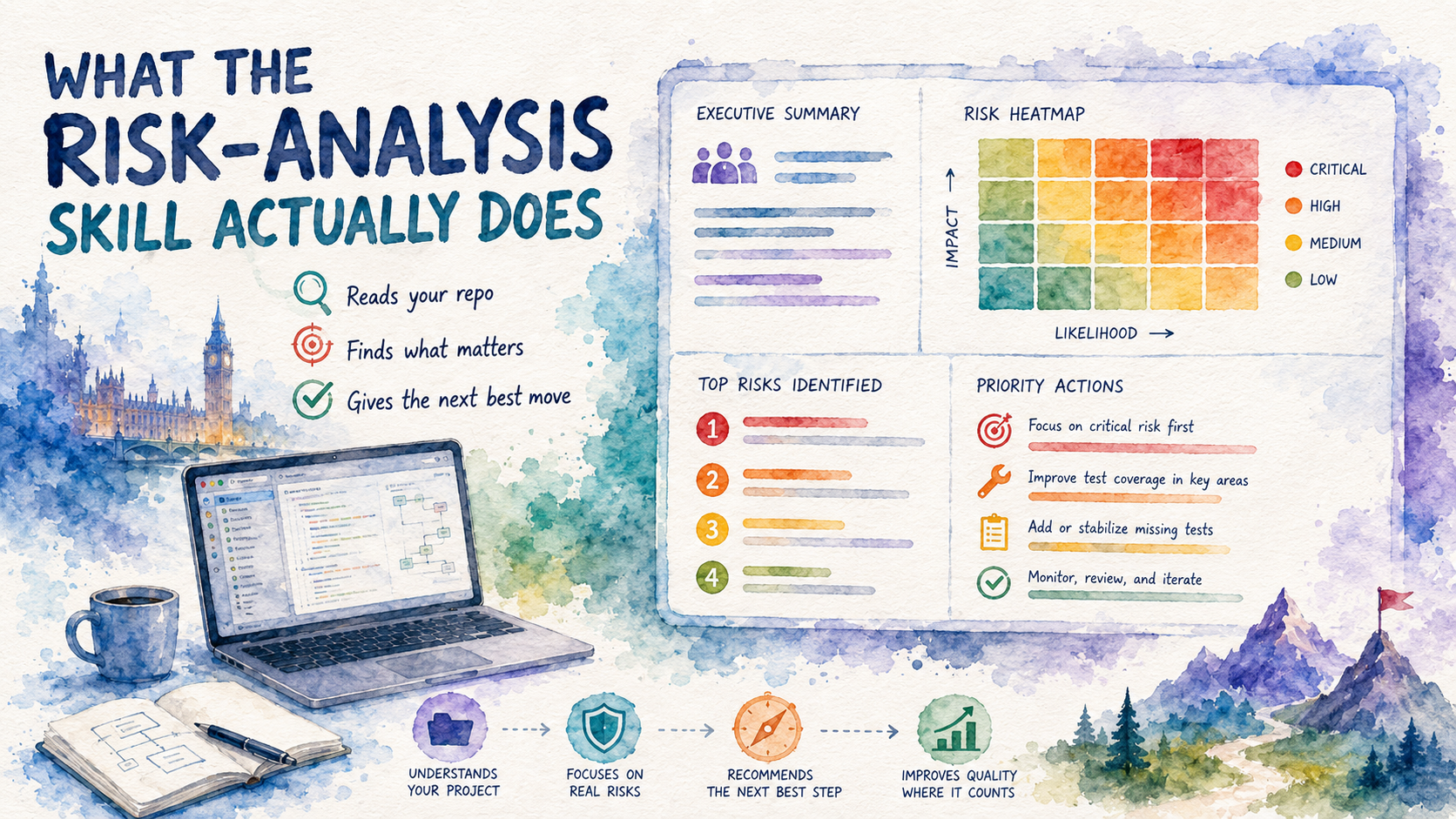
That is the gap the risk-analysis skill is built to close. Not by giving you another glossy QA sermon. By reading the actual project, deciding what kind of quality work the repo really needs, and handing you the next sensible move before poor Timothy turns release week into a stress experiment.
Why most quality advice falls flat
On paper, “improve quality” sounds sensible. In practice, it is about as useful as being told to “eat better” while standing in a petrol station with a sausage roll and no plan.
The real problem is usually not effort. It is fit.
- the repo shape is unclear
- the team is mixing low-risk and high-risk surfaces together
- nobody knows which testing layer deserves attention first
- planning has gone broad when it needed to go specific
- bug hunts, test reviews, and roadmaps are getting treated like the same job
That is where the skill starts to earn its keep. It routes the request first, then goes only as deep as that job actually needs.
What the skill is actually built to do
The strongest thing in the design is the command routing. This is not one giant “inspect everything” hammer. It has distinct workflows for creating quality plans, updating them, choosing the next risk action, hunting bugs, reviewing automated tests, and building a roadmap.
That matters more than it sounds.
If the user wants the next quality move, the skill should not wander off and perform a full repository archaeology dig. If they want a bug hunt, it should not first produce a lecture on maturity models. If they want a roadmap, it should not pretend a couple of generic bullets count as strategy.
The skill is opinionated in exactly the right way: different quality questions deserve different inspection depth.
The bit that makes it genuinely useful
Here is where people get caught out. They think “risk analysis” means paperwork. A sort of grey-cardigan, clipboard-heavy side quest where everyone nods earnestly and nothing ships faster afterwards.
Not this one.
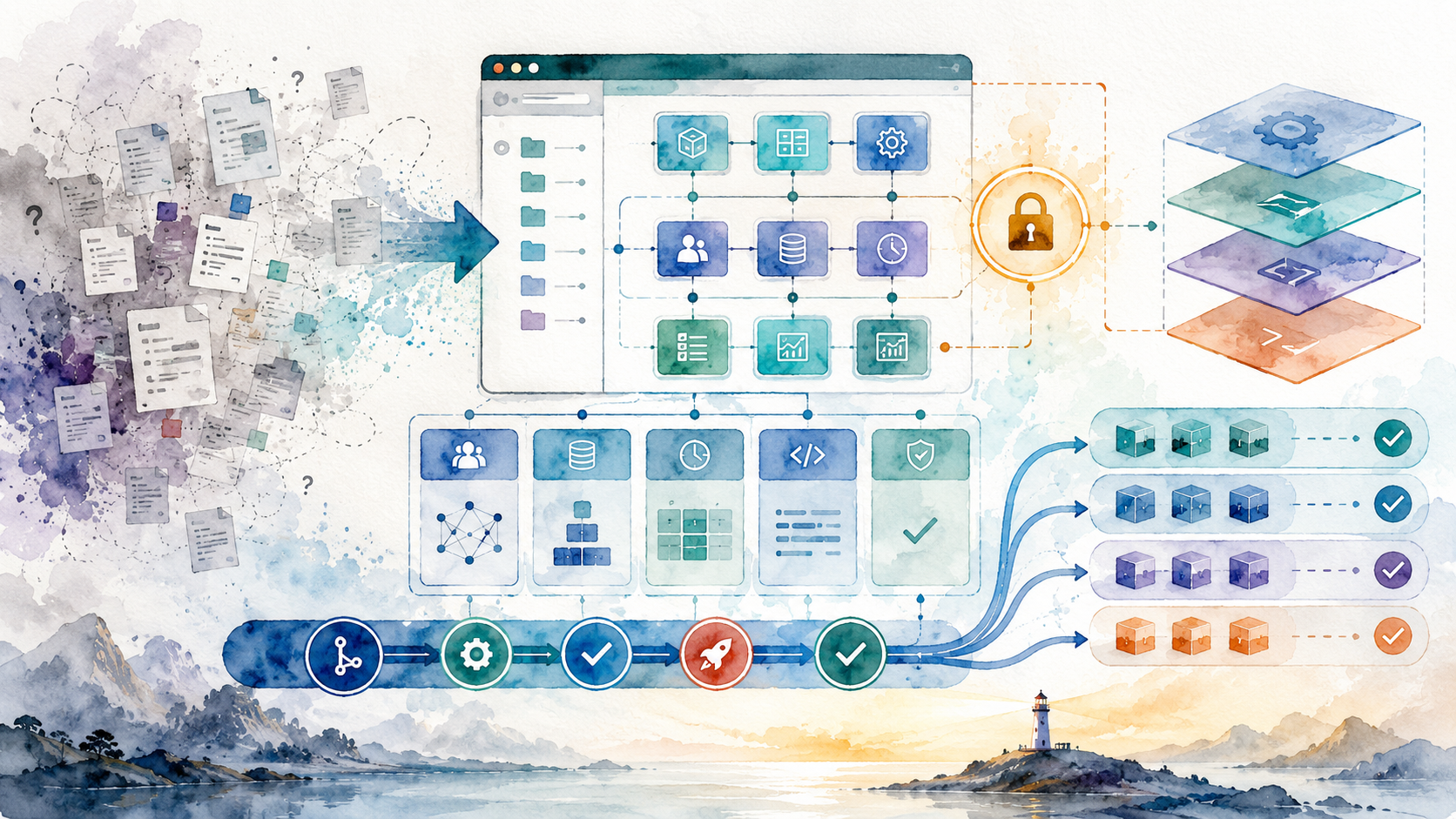
The skill is built around repo-specific quality strategy. It reads the actual code structure, applies plan-selection rules, identifies the active archetype, and only then decides what planning layer makes sense. Frontend, backend API, monorepo, CLI, data pipeline, SaaS, desktop, mobile: the point is that the recommendations should fit the thing in front of you, not some imaginary average project.
That turns the output from airy advice into usable direction:
- what quality work already exists
- what is missing
- what is not relevant
- what requires a deliberate user decision
- what the next risk-reducing step should be
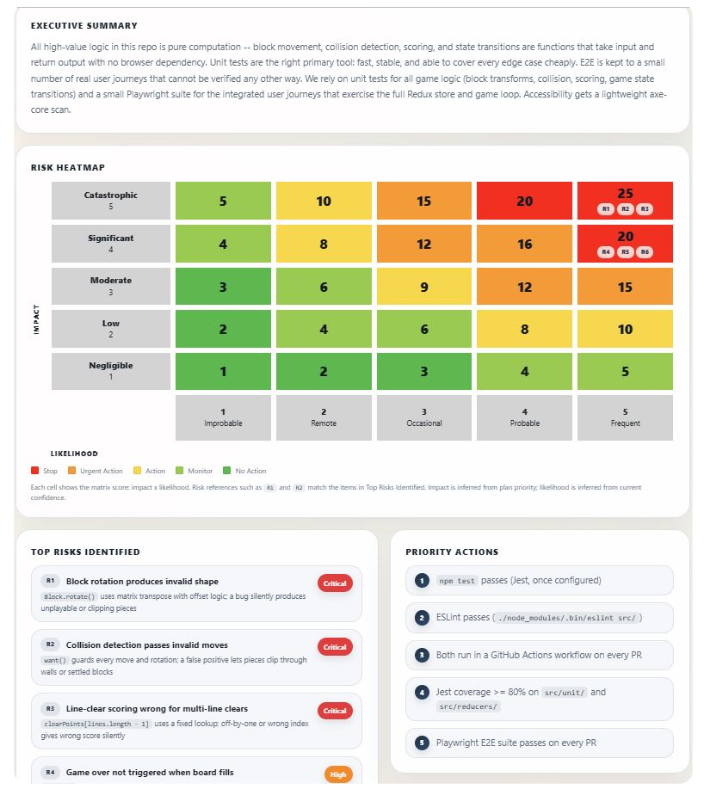
This is the bit teams actually need: not a noble speech about quality, but a risk picture, the top problems called out clearly, and a next-actions list that tells you where to spend effort first.
Why the lazy-loading rule is a bigger deal than it sounds
This is the unglamorous bit, and it is also one of the smartest parts.
The skill is strict about token discipline. It loads SKILL.md, then the single command file that matches the request, and only pulls in deeper checklists or references when a step explicitly needs them. That sounds boring. In practice, it is exactly the kind of boring that saves you money.
A skill that gulps the whole world every time tends to produce two bad outcomes:
- over-analysis that buries the answer
- confident generic output dressed up as thoroughness
This one is trying very hard not to do either. It keeps the work proportional, which is the difference between “useful quality strategy” and “someone has generated a very expensive PDF nobody will read”.
Where it pays off in the real world
Back in the real world, this kind of skill matters when a project is in that awkward middle stage. Too big for instinct. Too messy for one-size-fits-all QA. Too busy for a heavyweight process circus.
Maybe your frontend has decent unit coverage but your cross-surface workflows are basically vibes. Maybe the backend is solid but your automated tests are giving Kev-level confidence. Maybe the monorepo has one mature surface, three fragile ones, and a team arguing about whether the answer is e2e, API, or just finding one actual bug before someone says “quality” again.
That is the territory where risk-analysis shines. It gives the team a way to say, with evidence, “this is the top risk, this is the right layer, and this is the next move.”
Mr Grimshaw’s Honesty Corner
Mr Grimshaw clears his throat and taps his clipboard, so over to him.
That honesty matters. A tool like this should not promise miracles. What it should promise is better timing, better focus, and less generic noise. That is a much stronger offer anyway.
Bottom line
The risk-analysis skill is strong because it treats quality strategy like a real product decision instead of a ceremonial document. It routes the request properly, inspects the repo at the right depth, stays disciplined about context, and gives you something you can actually act on.
If your current quality conversations feel broad, expensive, and weirdly slippery, point the risk-analysis skill at the repo that keeps making everyone sigh. Best case, it gives you the missing map. Worst case, it tells you exactly which corner is on fire first, which is still a massive improvement over standing there with a bucket asking whose turn it is.